

Kids Program
Rising Stars
Ages 8–12 — Focus — Teamwork — Progression
Rising Stars classes are built around structured practice, teamwork, and progressive skill development. Students learn how to show up with intention, support their teammates, and apply what they've learned when it counts.
Start Your Free Week Trial“Nick’s experience and passion for grappling makes him a great instructor. He leads the kids and adults by example and upholds the values of his affiliations proudly. I would highly recommend North Star Jiu Jitsu if you’re in the area.”
Class Times
When Rising Stars Trains
Two classes a week, both at 5:30 PM, right after the Little Dippers class — so families with kids in both age groups can do one trip.
-
Evening
5:30 PM 2 days a week- Monday
- Wednesday
2 classes a week in total. See the full weekly schedule →
Membership
What It Costs
- First week free — no signup fee, no contract
- Family discount: 25% off each additional family member, up to 50% off
- Cancel whenever — membership is month to month
Classroom Standards
Our Three Core Rules
Every student is expected to follow three non-negotiable rules. These rules create a structured, safe, and productive learning environment where every student can grow.
Listen and Focus
- Stay engaged and face forward
- Do not distract partners during instruction
- Raise your hand to ask questions
Be Respectful
- Be kind and friendly to your training partners
- Treat your coach and teammates with respect
- Never attempt to hurt your partner
Give Your Best Effort
- Train with intensity and purpose
- Attempt the techniques learned that day during live practice
- If you are struggling — ask questions
How Kids Learn
Build Skills and Confidence, Brick by Brick
At ages 8–12, and sometimes as young as 6 or 7, kids become capable of learning techniques in Jiu Jitsu that require multiple steps, setups, and concepts to get working. Our end goal is to inspire confidence through visible progress, and we do this by teaching kids the most effective, skill-tested moves in Jiu Jitsu. Here's a brief snapshot of our curriculum:
Guard & Passing
Months 1–3
- Month 1: Flat Half Passing & Halfguard
- Month 2: Closed Guard, Top and Bottom
- Month 3: Loose Passing & Guard Retention
Wrestling
Months 4–6
- Month 4: Single Leg & Wizzer/Dogfight
- Month 5: Double Leg & Sprawling
- Month 6: Front Headlock & Inside Ties
Submissions & Back Control
Months 7–9
- Month 7: Turtle & Back Control
- Month 8: Closed Guard & Back Control
- Month 9: Mount & Back Control
Built to Chain Together
Each of these blocks covers an important fundamental part of Jiu Jitsu, with three full months dedicated to it. Each subject is covered in detail for a full month, and each topic builds off of the one before and after it — in both directions.
No matter which month your child starts in, any six months of training is built to contain the necessary building blocks to allow them to compete safely and confidently. While competition is always optional, we make a habit of encouraging our students to compete as a means of testing their skills. Competition is also one of the strongest means of building character for a young athlete, as it provides them with feedback in a way that they can understand both emotionally and intellectually.
Competition, Fundamentals, and Self Defense
Jiu Jitsu is both a thriving competitive sport and a strong foundation for self-defense. Everything we teach on the mats is designed to fulfill both of these roles. When a kid is learning to sprawl to stop a takedown, it's because of the sport-based incentive structure built into the layout of the class. But make no mistake — being able to stop a person from getting on top of them in an altercation is as real-world self-defense as it gets.
Staying Informed
Monthly Reports and Quarterly Report Cards
Progress at Northstar Jiu Jitsu is intentional and documented. Each month parents receive a report, and every quarter — at the end of each three-month curriculum block — parents receive a full report card of their child's progress. Progress is measured objectively, based on the level of understanding a student demonstrates from class to class.
Generally speaking, younger kids take much more time to see progress than older kids. Both programs are designed to teach young athletes the same fundamental skills, but are structured differently to suit their age group.
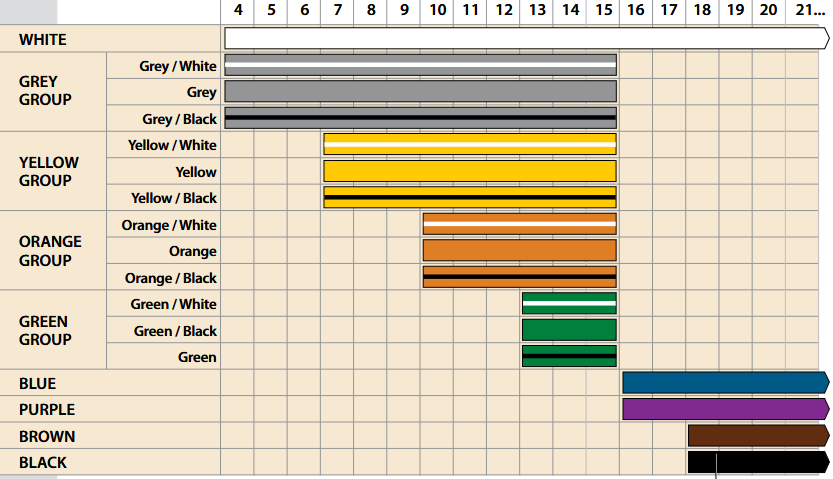
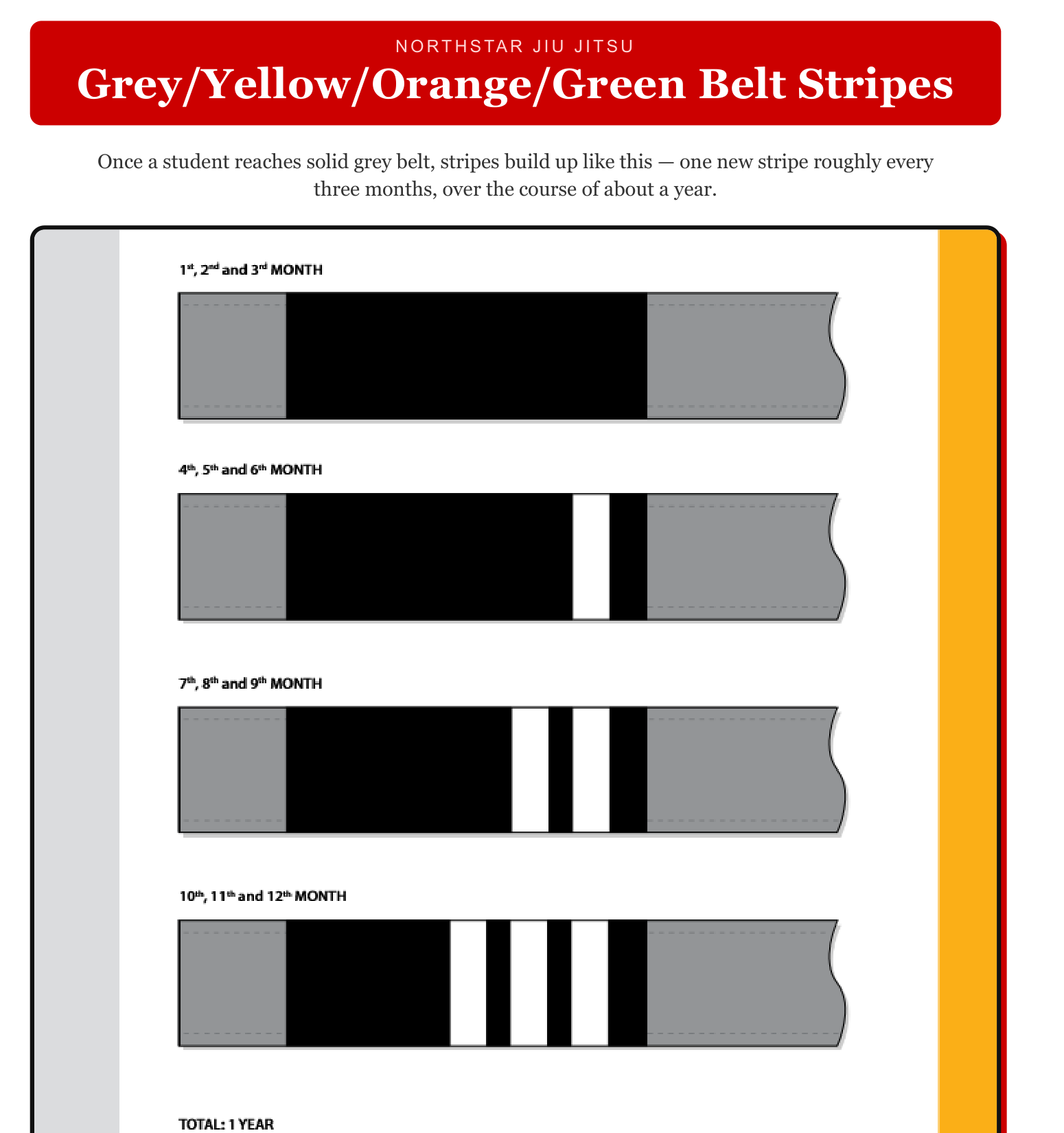
Kids improve at different paces — some kids will be better at certain concepts than others. But regardless of the speed of improvement, progress takes time, years in fact. A green belt, the highest belt achievable for kids, takes on average 8 years of consistent training to acquire, but demonstrates a level of mastery in grappling that would warrant an automatic promotion to purple belt (the belt required to become an instructor or referee, i.e. a professional) upon reaching 16 years of age.
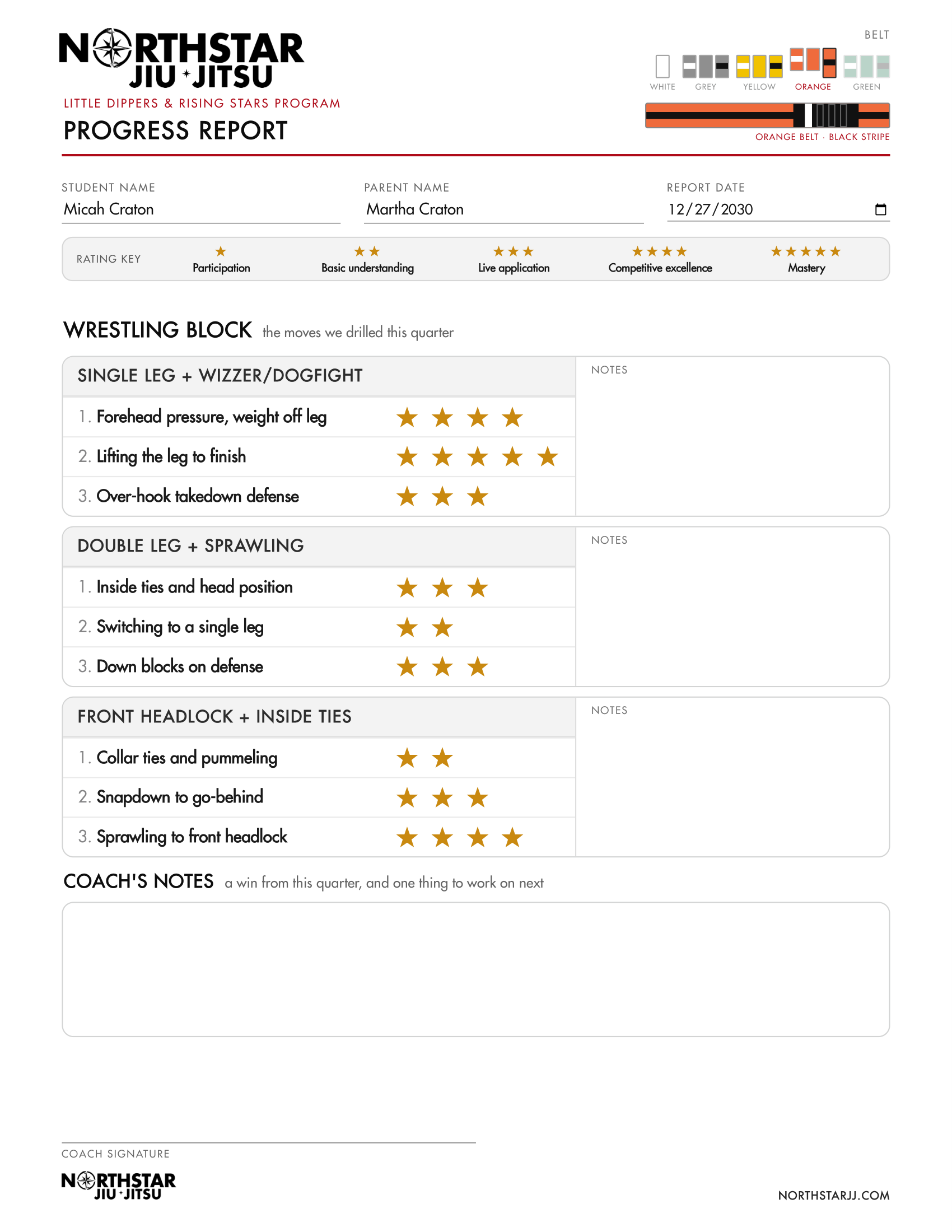
Example report shown with placeholder names.
For Parents
Common Questions From Parents
Is Jiu Jitsu Safe for Kids?
Classes are structured, supervised, and built around respect, control, and safe partner practice.
Does My Child Need Experience?
No. Most kids begin with zero experience and learn step by step through coaching, drills, games, and live practice.
What Does the First Kids Class Look Like?
Students are introduced to the rules, basic movements, simple techniques, and partner activities in a structured, beginner-friendly environment.
How Do You Keep Classes Structured?
Classes follow clear rules, consistent routines, focused instruction, and age-appropriate training so students know what is expected.